problem
We were ready to share Lazuli, a modern learning authoring tool, with the world. But first, we needed a way to accept paying customers.
exploration
Making our business values concrete in order to develop a sustainable and humane business model
I started by completing the "Value Map" exercise by Strategyzer in which I did a brain dump of all of a learning designer's jobs to be done, pain points, and potential gains using quotes from user interviews and desk research. I then mapped these against Lazuli's features and current value proposition.
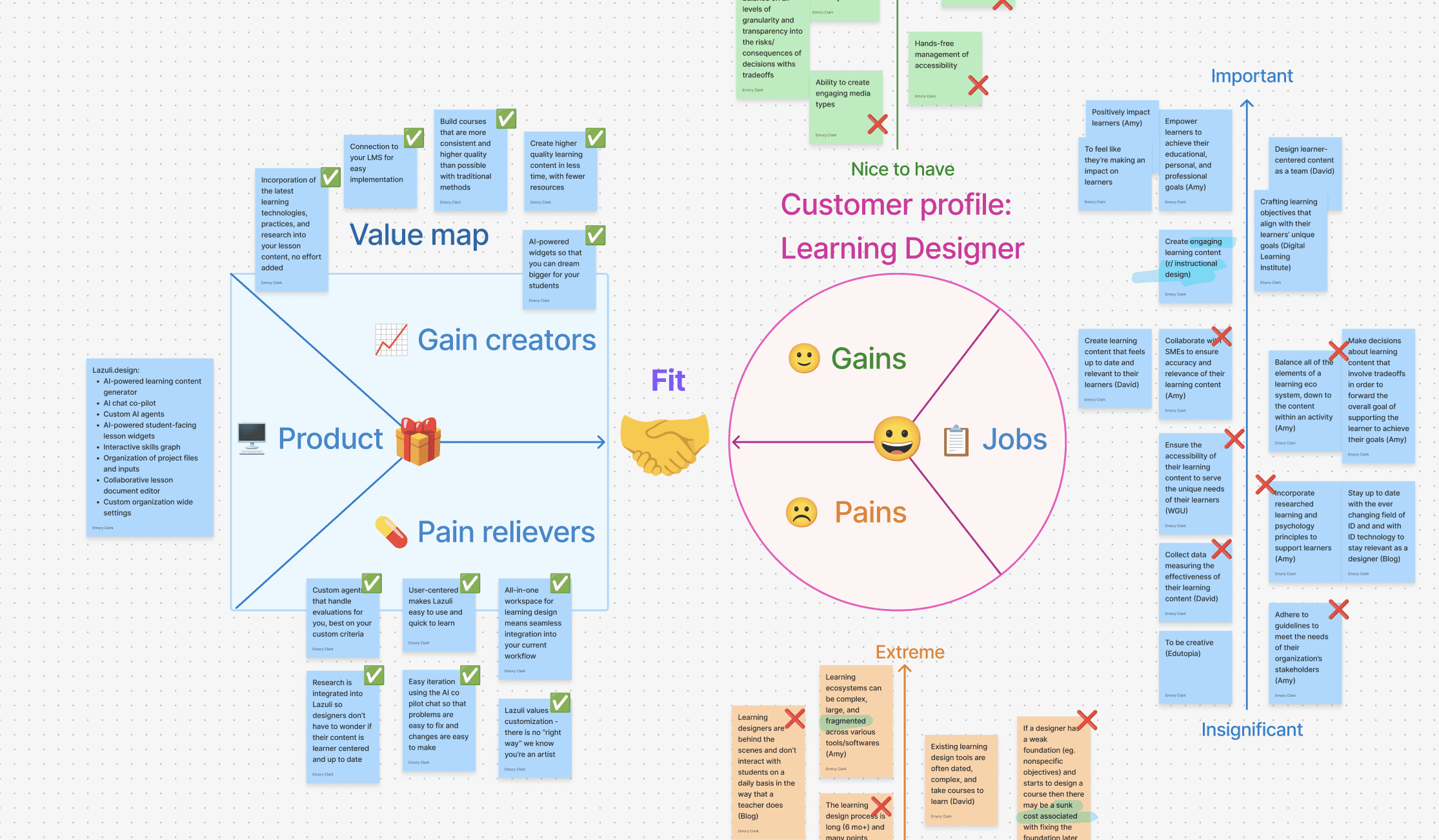
This exercise helped me articulate the value of our product. Most of a learning designer's pain points were related to their workflow while, oppositely, their jobs to be done were primarily related to serving learners.
I shared my findings with my team to receive feedback and co-create our product's one-liner: "Lazuli automates the tedious and streamlines the complex, so you can stay focused on your learners."
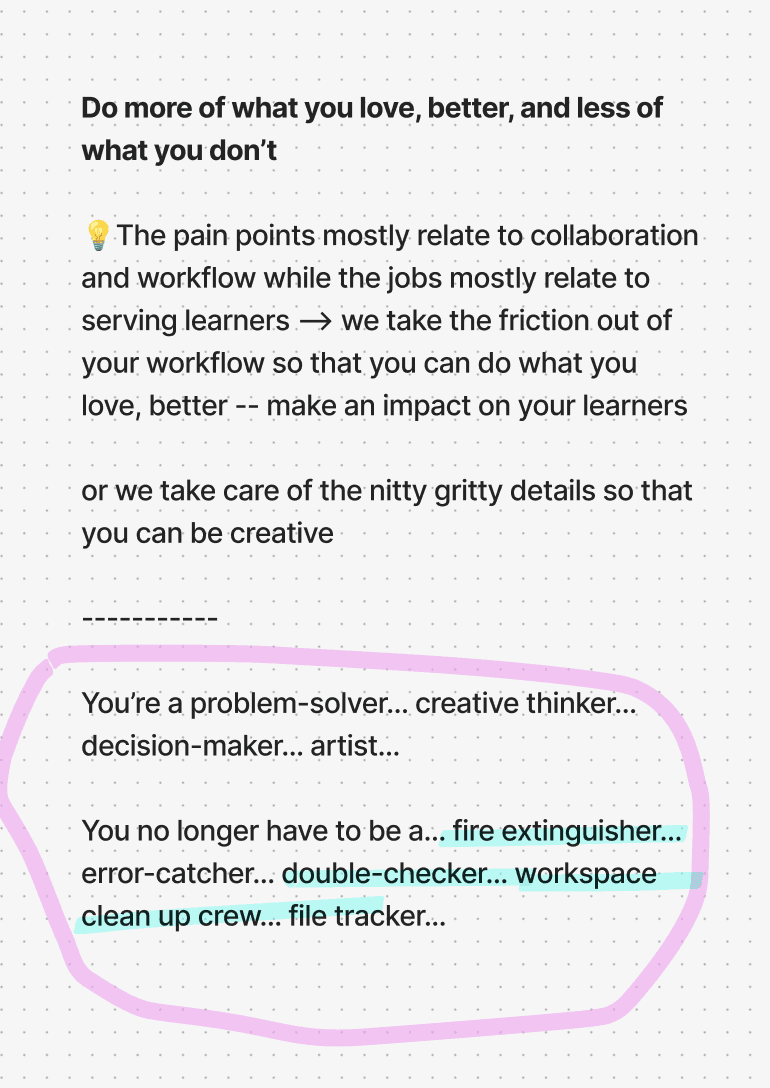
LDs' pain points relate to their workflow

Iterating on our value proposition
Now that we understood our value proposition clearly, I had a foundation to bring forward into our business model. I started by going wide with business model ideas that might fit Lazuli. I then did a gut-check to evaluate the viability of each option.
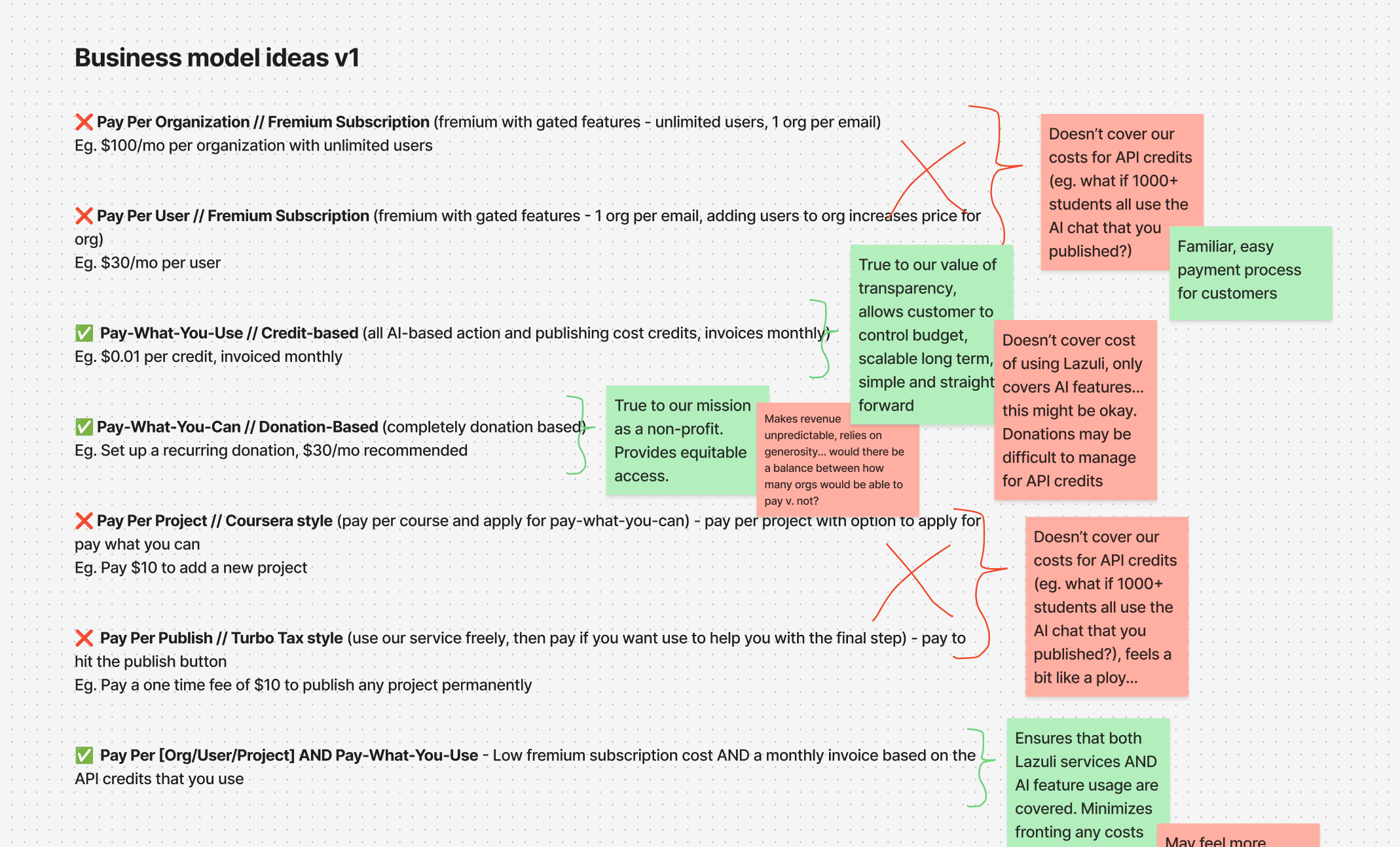
I presented my recommendations to the founder of Lazuli, and we worked together to articulate the business model we would move forward with: upgrade per organization with an option to purchase API credits a la carte.
principles
I distilled the results of our exercise into a project goal and a set of values related to billing
Our team could refer back to these values when approaching design challenges to make sure that we're always aligned with what matters.
Goal
Enable users to understand exactly what they get at each tier.
Remove confusion or friction around when/why payment is required.
Reinforce Lazuli’s value proposition: saving time, improving quality, empowering creativity.
Emphasize nonprofit transparency. We only charge to cover real costs.
Provide paths to sponsor subscriptions for underserved institutions.
Transparency
Friction-free work
Warmth and understanding
pricing model
Unobtrusive pricing tiers that uphold our core value of charging for cost, not gating value
By articulating our billing principle above, we uncovered our most core value: we only charge you for what costs us. While Learning Design Alliance is a SaaS startup, we're also a 501(3)(c) nonprofit. Many SaaS companies gate a feature based on its value, but we want to only charge for its cost to us.
I facilitated an exercise with our founder to organize Lazuli's features based on their primary cost driver: time, storage, or AI credit usage. We discovered that the features that didn't fit into one of these categories provided value without a significant cost to us. Therefore, we wanted to provide these features to users for free.
design
A calm, guilt-free billing experience that avoids dark UX patterns like the plague
When designing our billing experience, I focused on using progressive disclosure to reduce cognitive load and avoid giving users a sense of urgency. Our billing surface is to be used as a tool for users, not as a sales tactic. Our prediction was that providing a genuinely helpful payment flow, we would earn users' trust and secure their loyalty for longer, encouraging them to recommend Lazuli to others.
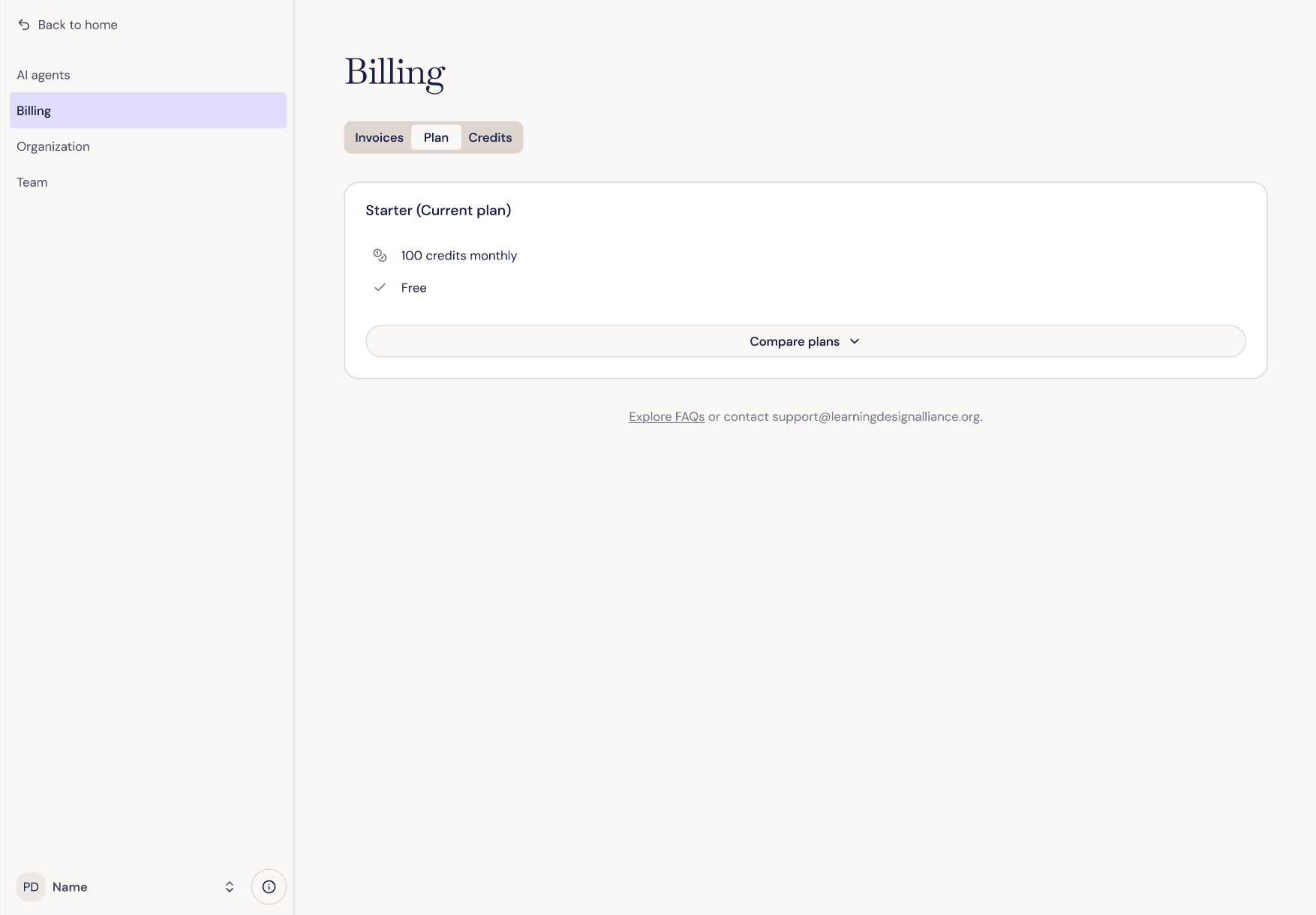
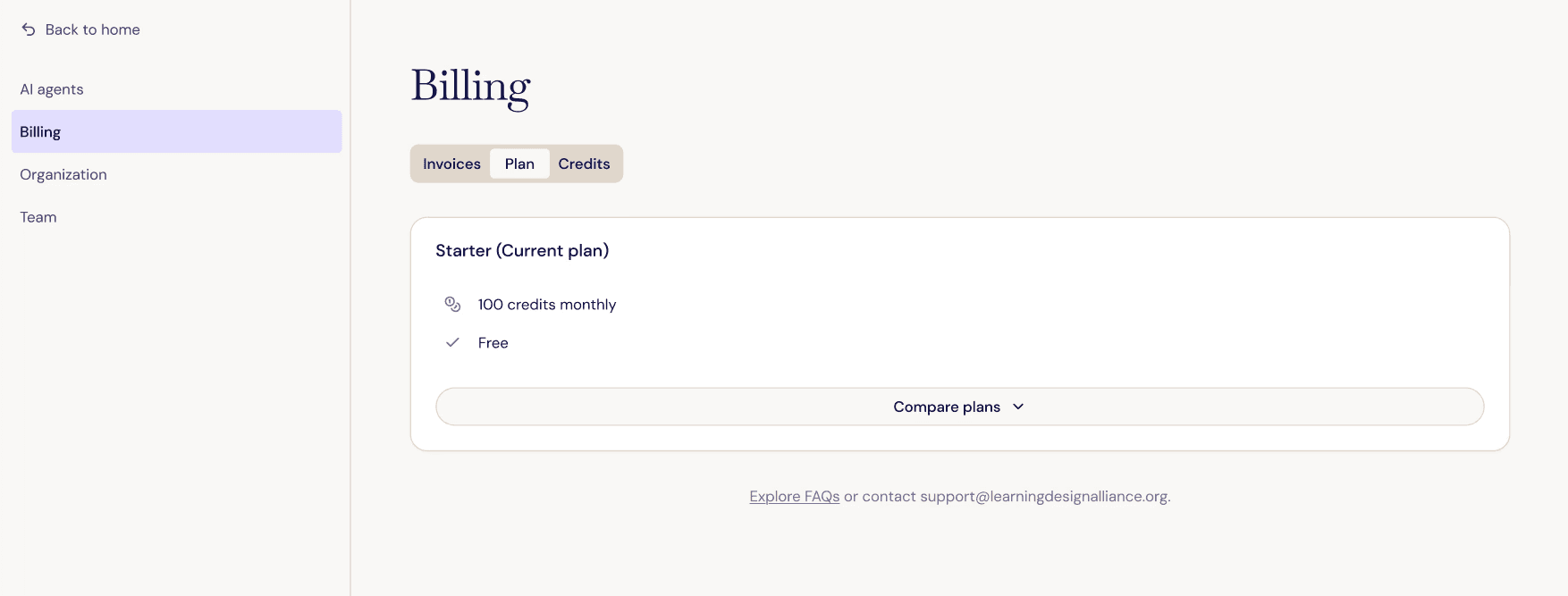
A simple "Plans" page that uses progressive disclosure to reduce cognitive load
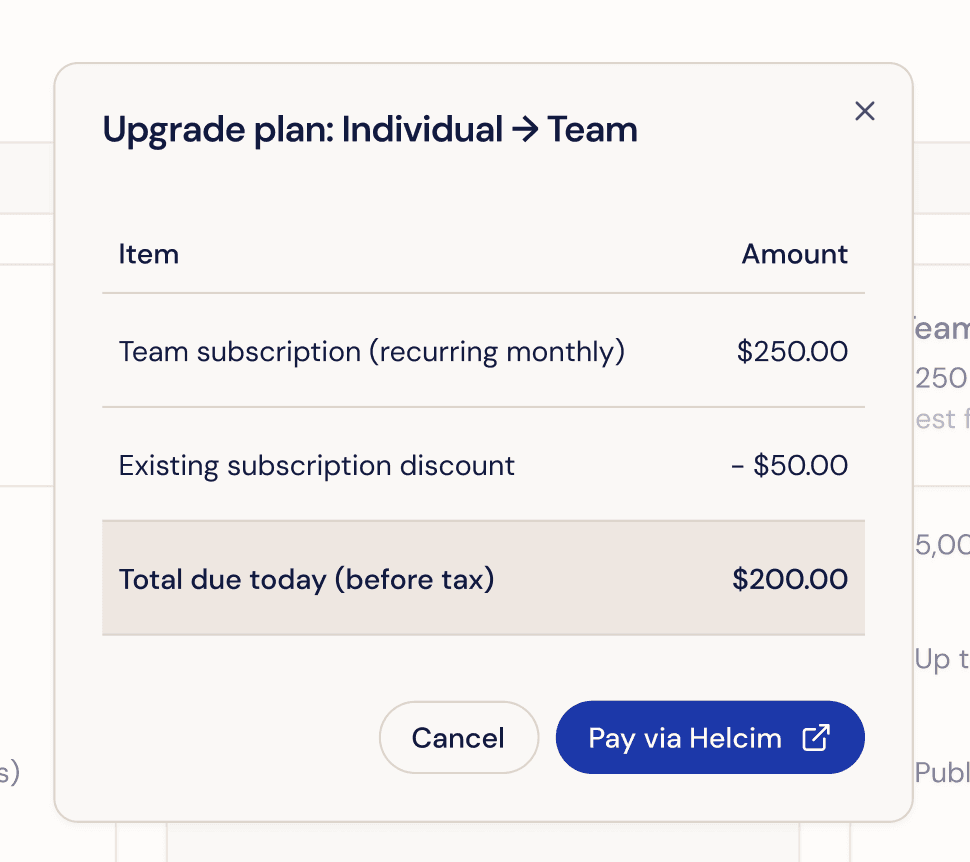
Clear payment details when upgrading
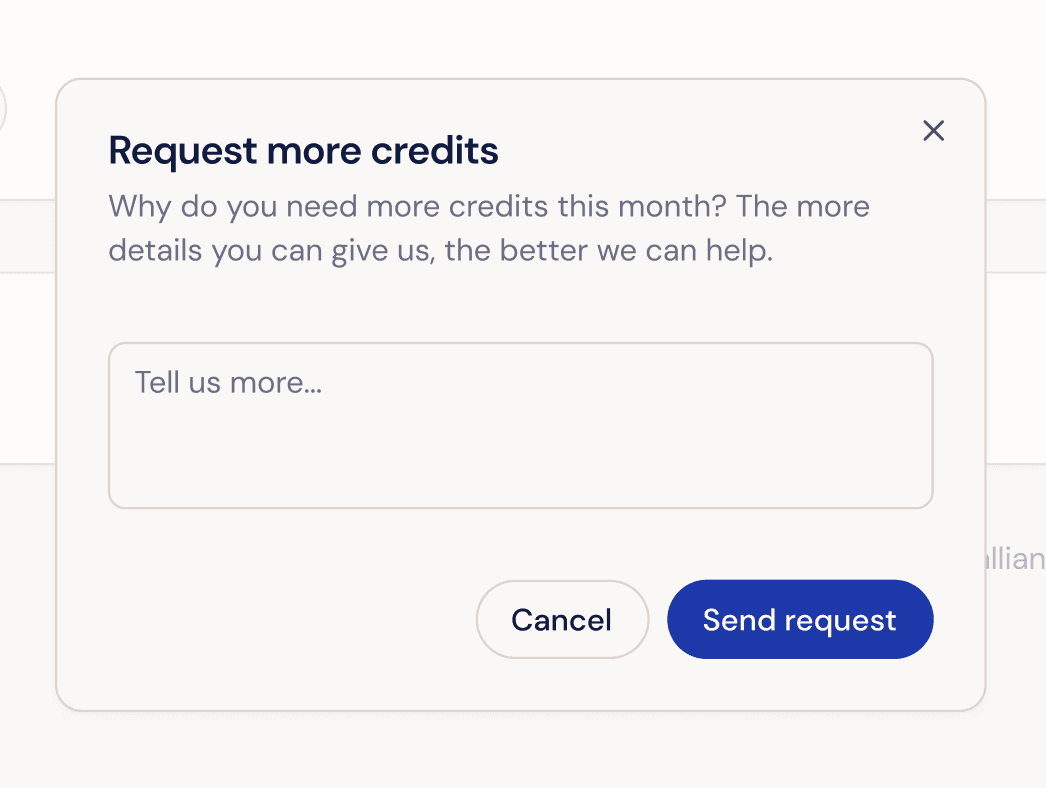
A quick form to receive more credits
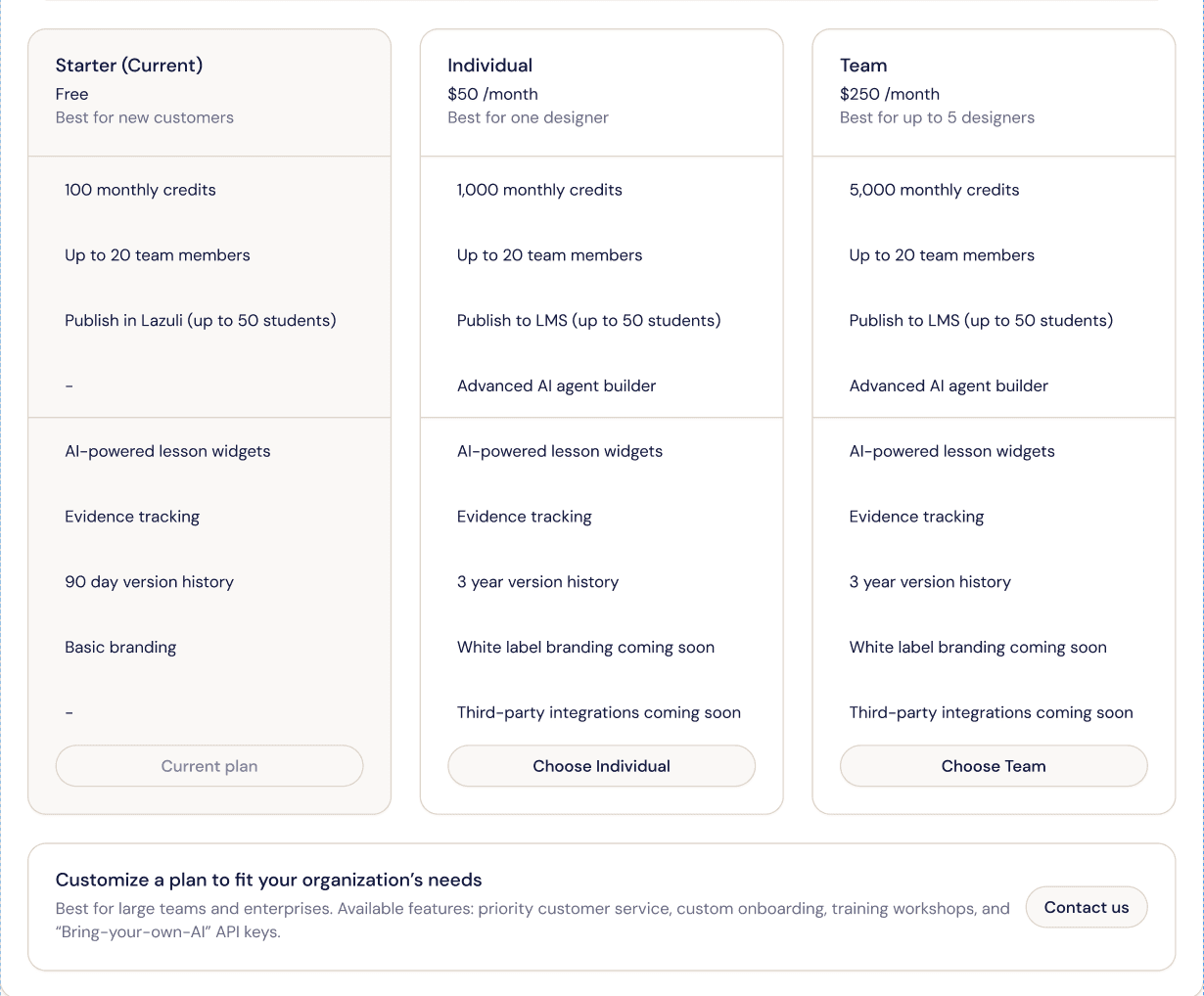
Simple pricing tiers that use neutral language and avoid sales jargon
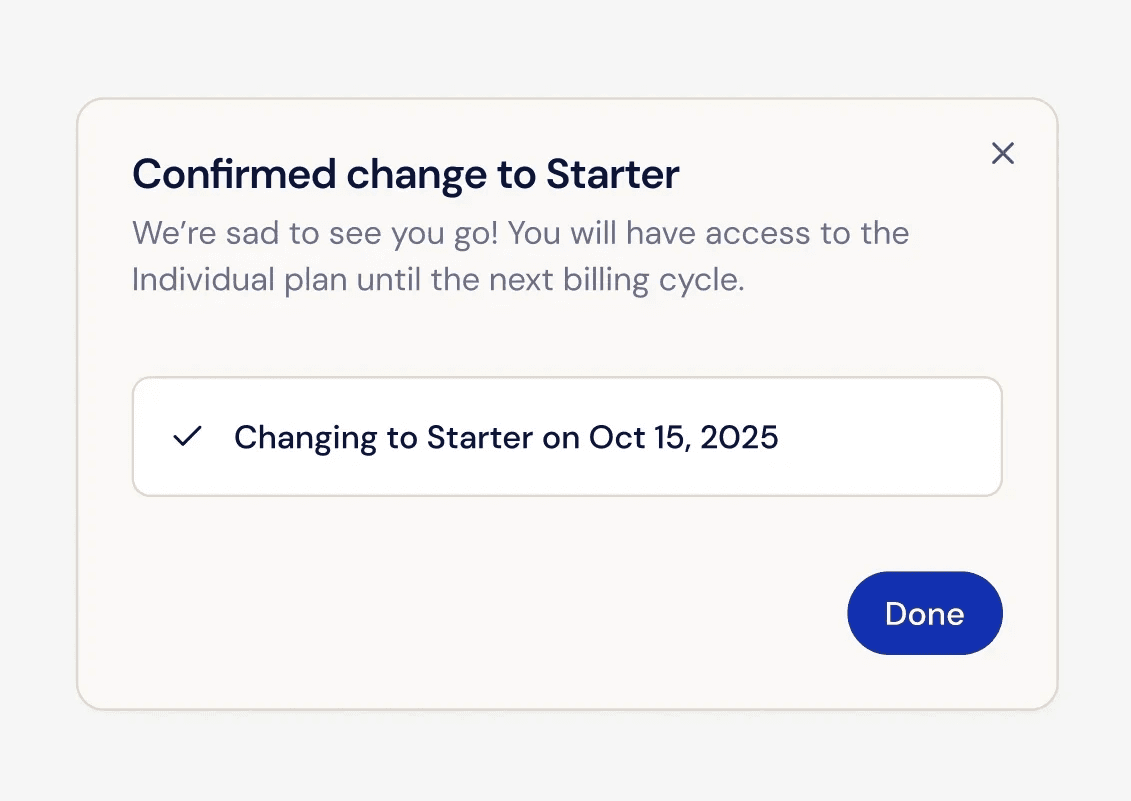
An unfussy plan downgrade
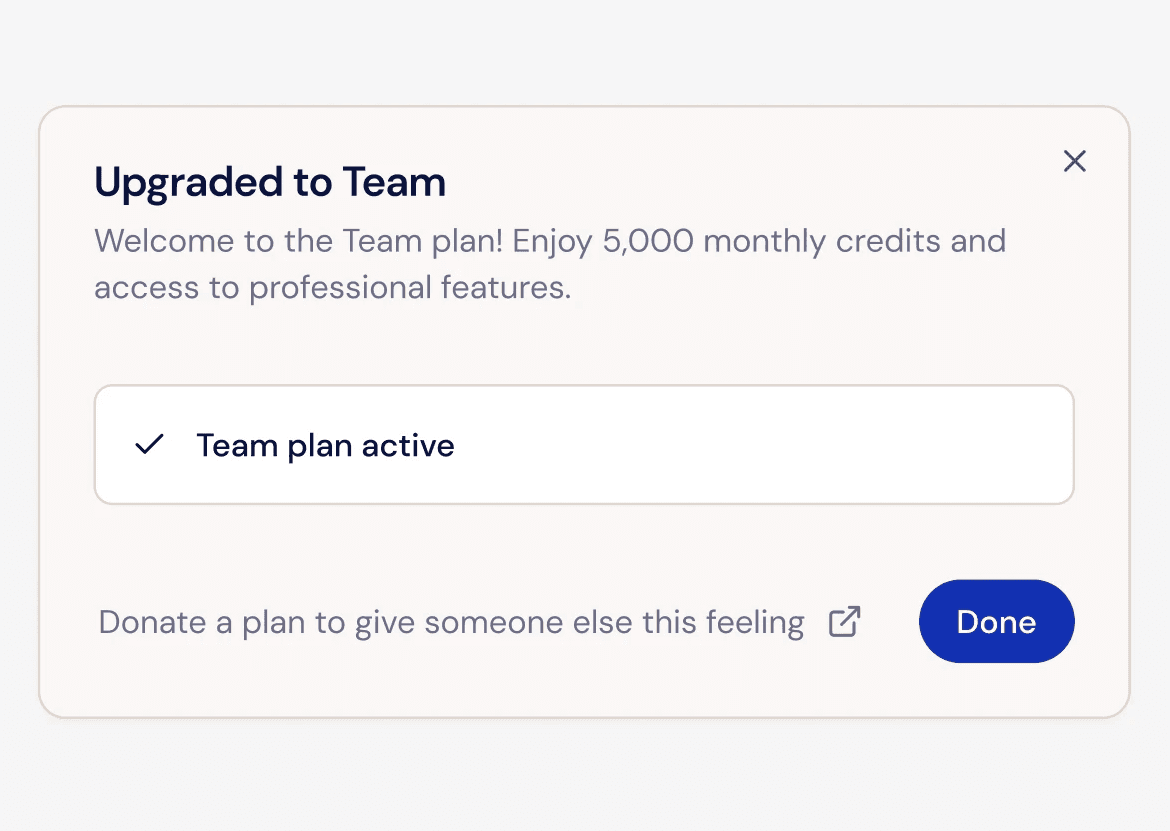
A simple plan upgrade
what I learned
In order to build a values-aligned feature, you have to first take the time to articulate what you believe in.
A few learnings I will carry into my next project:
I will certainly use the "Value Map" exercise again. By pausing to reflect on my company's foundational beliefs before thinking in UI, I was able to deliver a design plan with more depth and meaning.
Language is subtle, but very powerful. It takes a mindful designer and a fine-toothed comb to pick apart the subconscious weight of words in UX writing, but the result is impactful.
Dark UX patterns are baked into even the most iconic SaaS platforms, especially when it comes to billing. Even if a company has strong values, payment features is where those values waver. Putting your money where your values are is bold and increasingly important.